
Historic Ground
By Beth Yarbrough

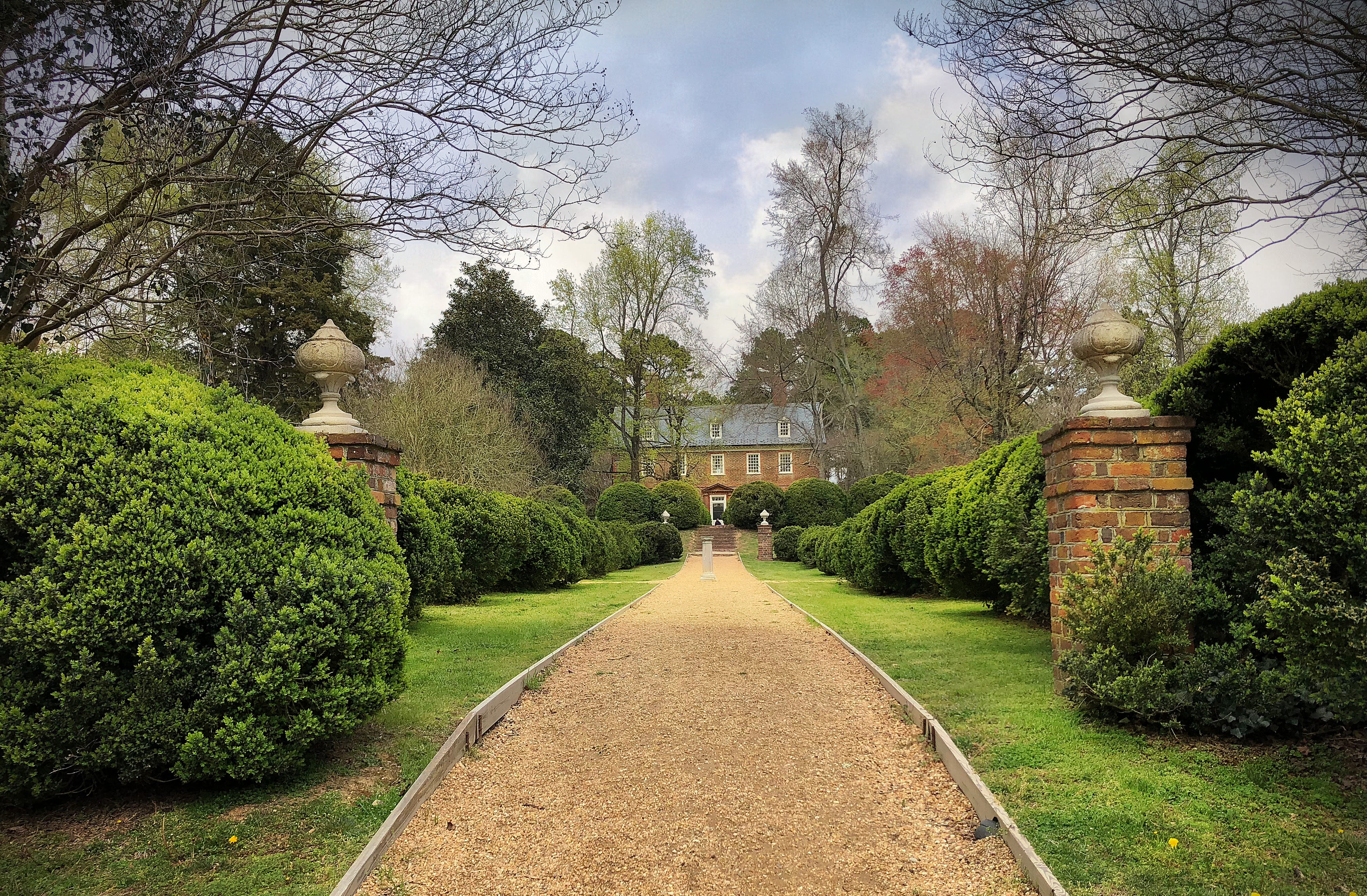
Fitting the story of Berkeley Plantation in Charles City, Virginia into a neat and tidy post is about as easy as deciding to harness the James River, which graces Berkeley’s front yard, into a Wedgwood teacup.
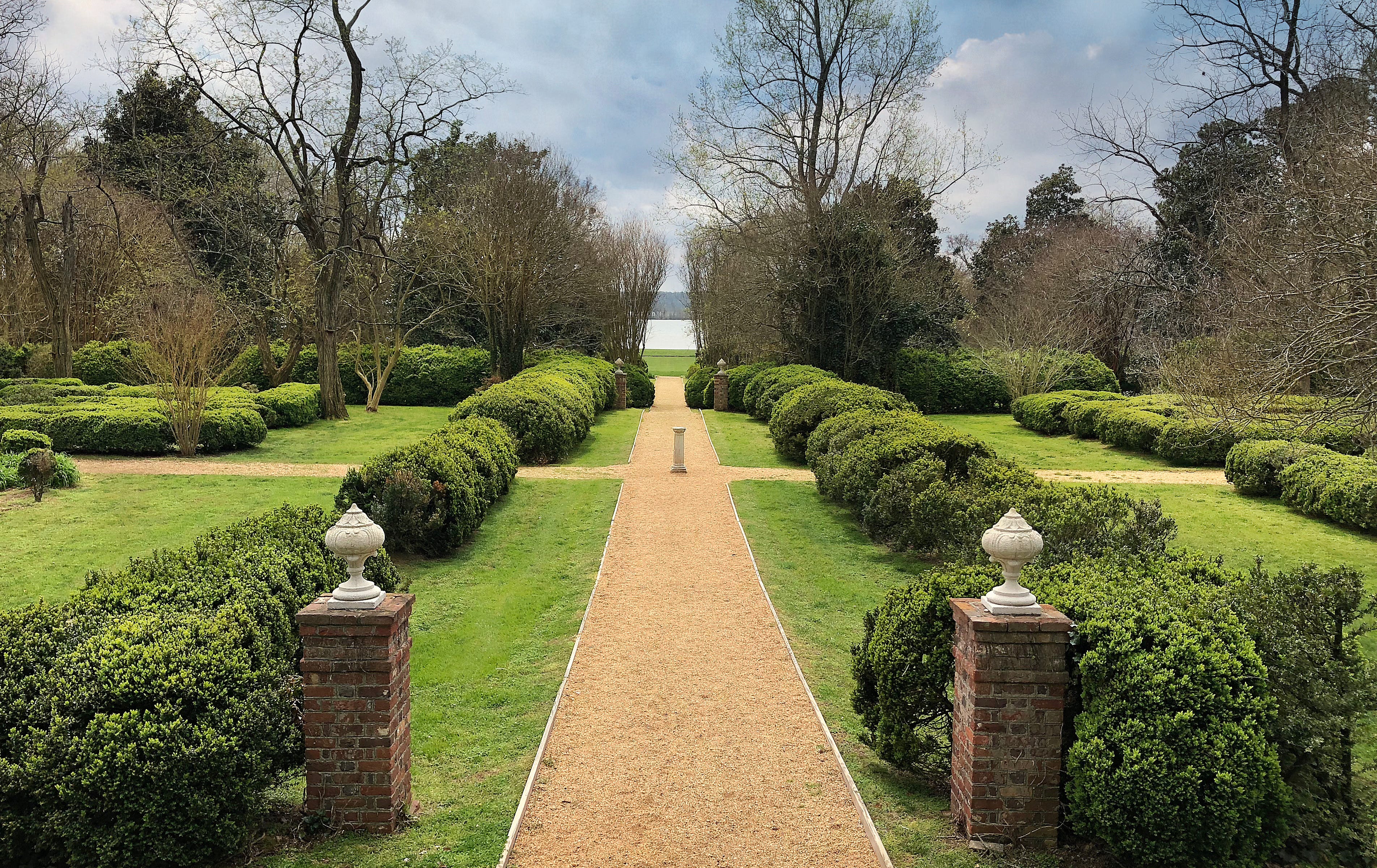
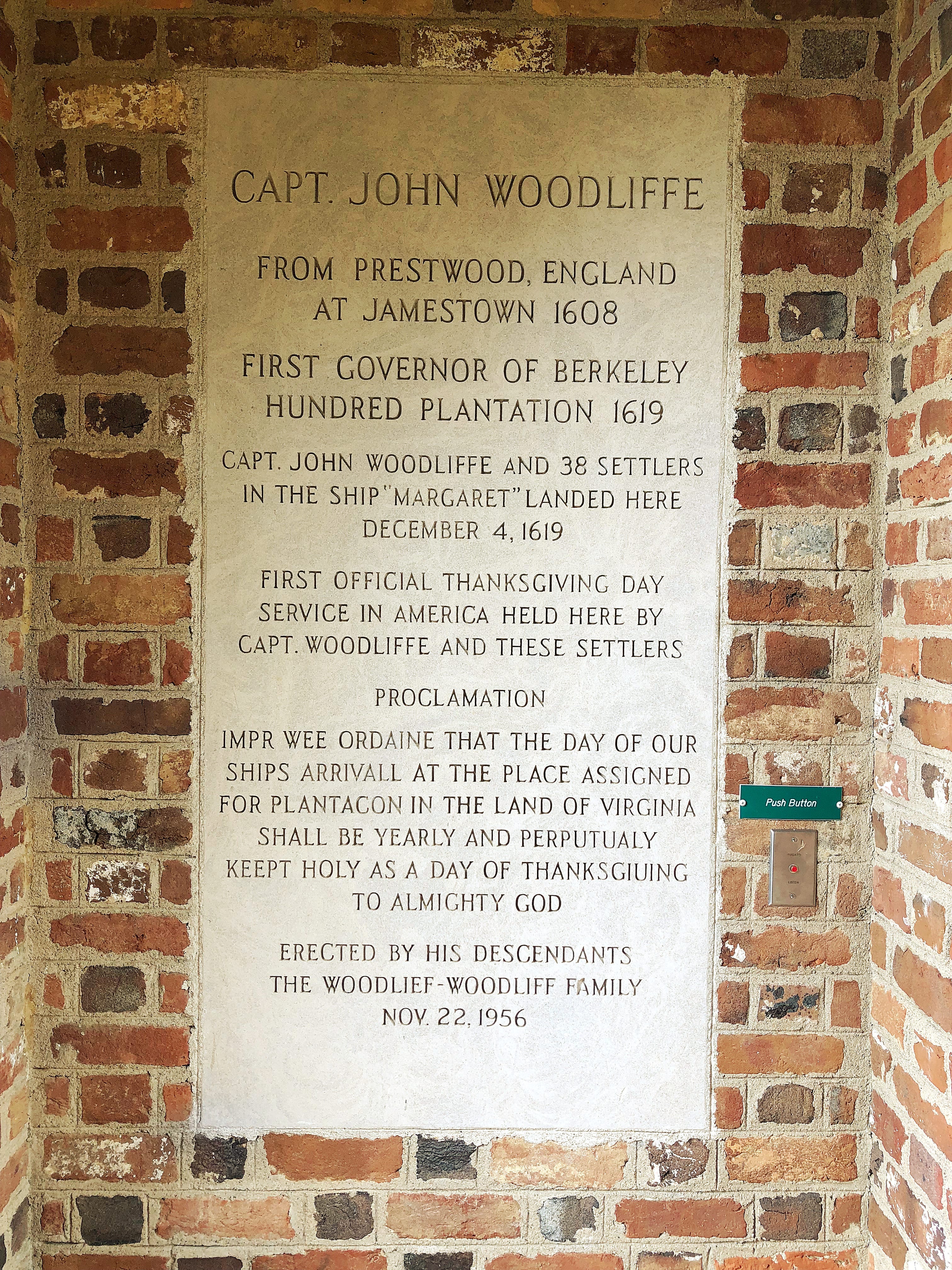
By way of explanation, it’s worth noting that the first Thanksgiving (and you thought it happened in Massachusetts), plus a lineage that included two US Presidents, and even the origins of the song Taps can all be pegged to this spot. There is more, of course, so I can only try to give you a sense.
The idea of Berkeley was born in England. England was running out of room. Four men, having received a nice land grant from King James, formed The Berkeley Company and chartered a ship, a crew, and a contingent of talented men to sail to Virginia, put down roots on that land and begin earning money.
One of the men on that voyage was hired to write it all down as it happened - which he did. That is how we know that they literally prayed their way across the ocean, fearing for their lives, and not knowing from one minute to the next if they would survive.
Once they did arrive, they had also been commanded by their employers to immediately kneel on the dry land and give thanks for safe passage, commemorating the date and observing it every year thereafter as a day of thanksgiving. The date was December 4, 1619 - which predates by almost two years the famous feast thrown by the Pilgrims.
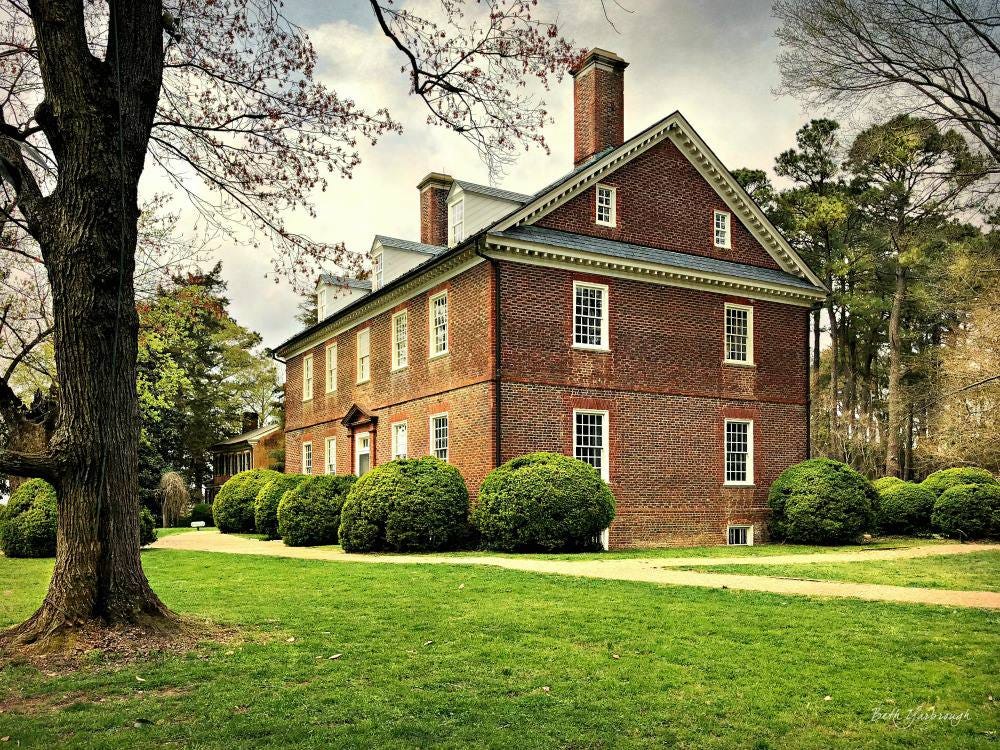
Fast forward 72 years, then, to 1691, when a man named Benjamin Harrison III purchased Berkeley and established the first commercial shipyard on the James River. Ironically, 18 of the gunboats that were used in the Revolutionary War were later built there.
In the meantime, however, Benjamin Harrison IV decided the place needed a proper house, so in 1726 he commissioned the handsome Georgian house you see here, and marked the occasion with a date stone that is still visible over one of the side doors. Berkeley is the oldest documented three story brick house in the state of Virginia.
Fifty years later, Benjamin Harrison V, born at Berkeley, was one of 56 men who signed the Declaration of Independence. Is your head spinning yet? Well, it gets better.
Three years prior to that - in the year 1773, Benjamin Harrison V had welcomed a son, also born at Berkeley, who went on to become the 9th President of the United States. His name was William Henry Harrison - and, by the way, William Henry later had a grandson - Benjamin Harrison - who became the 23rd President of the US.
During the Civil War, while Berkeley was occupied by Gen. George McClellan’s Union Army of the Potomac during the summer of 1862, another interesting chapter was added to the story. Union Major General Daniel Butterfield decided to commission a new bugle call to signal the end of the day for his troops. The resulting melody was so popular that it quickly gained widespread use, and is today known as Taps.
One of the drummer boys encamped with the Union troops at Berkeley that summer was a teenager from New York named John Jamieson. He survived the war. Forty five years later, in 1907, he saw a notice that Berkeley was to be put up for sale. Recognizing it as the site of his Civil War encampment, he bought the place.
Berkeley, of course, had not prospered before the war without the use of enslaved labor in everything from carpentry and blacksmithing to household help. The least skilled among them were consigned to work in the fields. A history of Berkeley’s enslaved is outlined on their website, including a statement from the Jamieson family and genealogical links for anyone interested in tracing enslaved family connections.
Since the purchase by John Jamieson, successive generations of the Jamieson family have held and cared for Berkeley - working the land, restoring the house and contents, and eventually opening it all to the public.
It was the first of the great James River plantations to be opened as such, and remains open today. Thanks to the ongoing efforts of the Jamieson family, Berkeley has never received state or federal funds, and has generated revenue solely from admission tickets, weddings, and farm income.
With continued good luck, the future of Berkeley seems secure, and as for the role it played in the formation and history of our nation, I’d say those men who gave thanks for safe passage on December 4, 1619, were standing on some fairly significant ground.
For complete information on Berkeley, please visit them at www.berkeleyplantation.com.
Your pictures are so nostalgic to me. I lived for some time in Northeastern NC. I loved every minute of it. Great memories.
I am thinking this is the plantation that I visited some years back. In the well house, you could look down the masonry well and see an entrance to a secret escape passage from the well to the waterside. Please correct me if not. Also, as my partner and I were the only visitors viewing the gardens on a foggy cold day, I asked the gardener if there were a bathroom for the public (the house is not open to visitors) and he directed me to the plantation privy, a grand affair with 5 seats around the interior of the "necessary" house!